Water Leak Detection

Water leaks can be a major problem, especially in spaces like the utility bay or manabloc bay where they might go unnoticed for some time. To catch potential issues early, I added leak detection using Shelly Plus Flood sensors (Gen 3).
Choosing the Sensors
I considered several options, including sensors from HomeSeer (Z-Wave), Zooz (Z-Wave), and Aeotec (Z-Wave), but ultimately went with the Shelly Plus Flood. At the time, Gen 3 was being replaced with Gen 4, so clearance pricing helped make the decision. They run on Wi-Fi and have a battery life of approximately one year.
The Gen 4 flood sensors have much longer battery life and an improved sensor, but they dropped the temperature sensor capability, a feature I wanted for freeze warnings. Several of the other sensors I considered have temperature monitoring.
Installation Locations
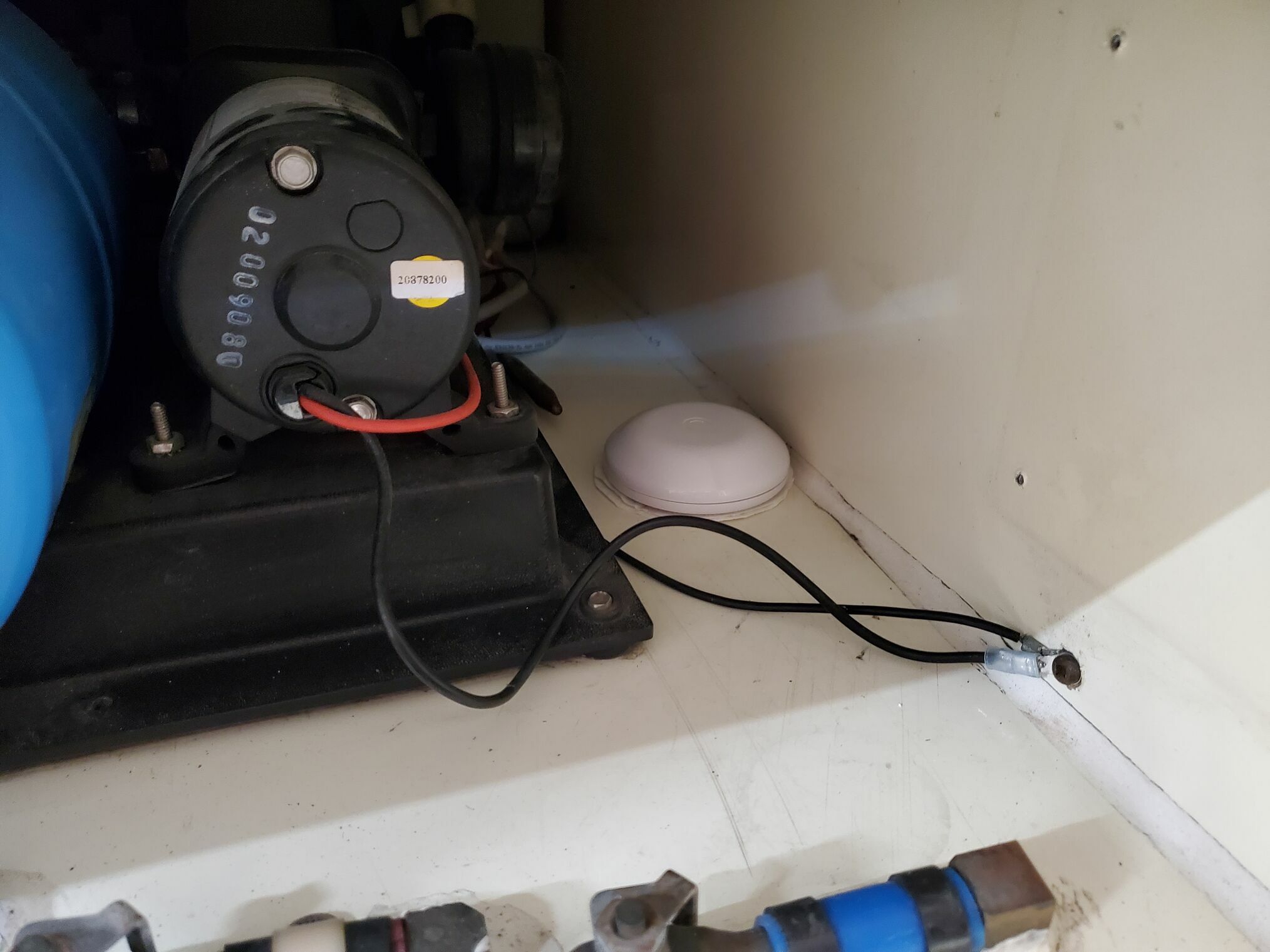
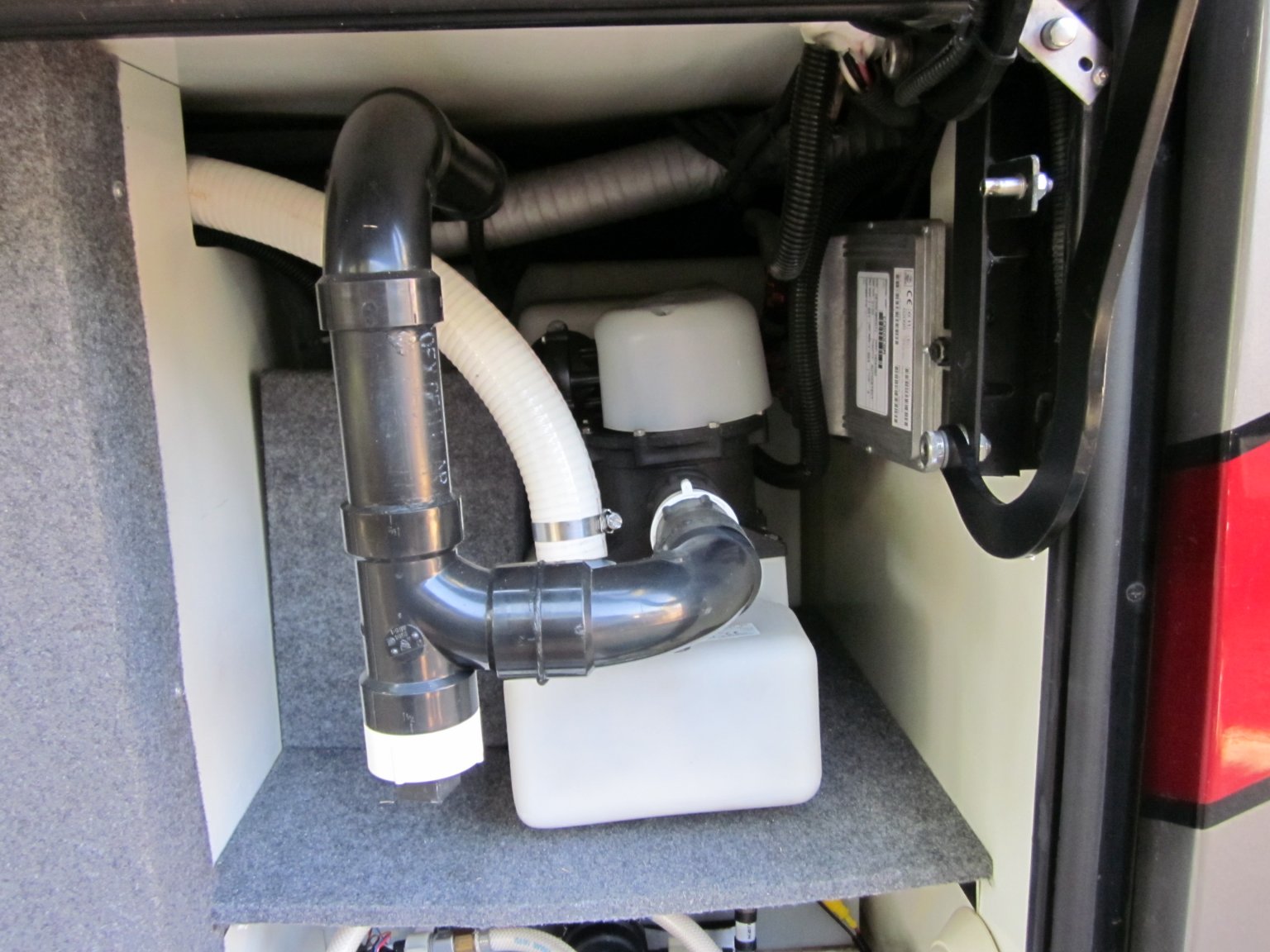
I placed one sensor in the utility bay near the dump valves and water faucet connections. The second went in the manabloc bay near the water pump. These locations made sense for leak detection and also allowed me to monitor temperature for freeze warnings.
Mounting Solution
The sensors don’t come with any mounting hardware—they’re designed to be placed on the floor and forgotten. However, gluing the sensor down would make battery replacement a hassle, and the bays experience enough vibration during travel that basic adhesive tape might not hold long-term.
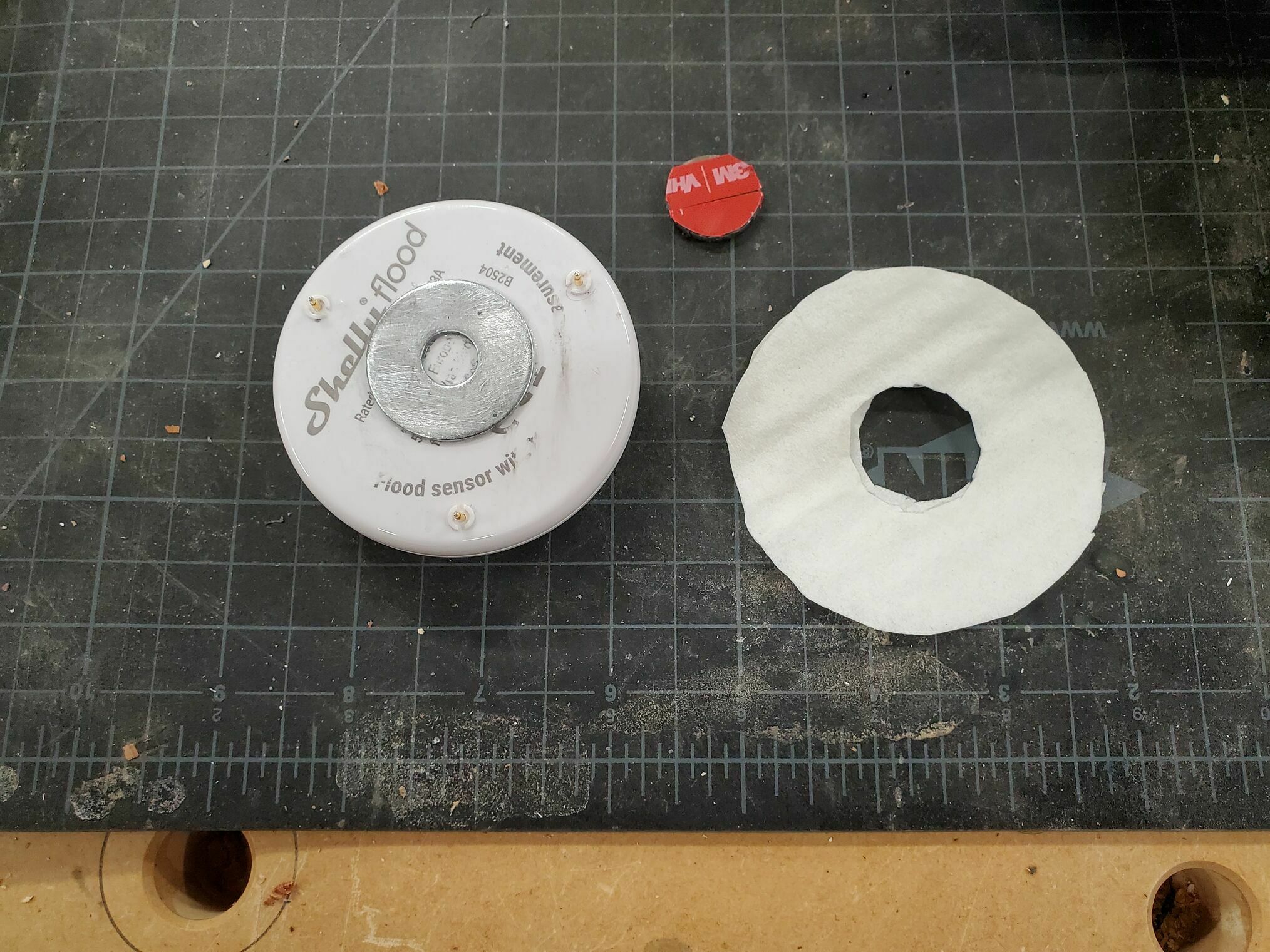
Instead, I glued a thin metal washer to the bottom of each sensor using cyanoacrylate adhesive. Then I affixed thin (1.5 mm) rare earth magnets to the bay floors with double-sided VHB tape. This creates a magnetic mount that holds the sensor securely in place but allows easy removal for battery changes.
One important note: you don’t want the washer and magnet stack to be too thick, or the sensor’s contact pins won’t touch the bay floor properly.
Improving Water Detection
The Shelly Plus Flood has three spring-loaded contact pins on the bottom that all need to touch water simultaneously to trigger an alert. On a flat surface, this means water has to pool enough to bridge all three contacts, which could delay detection in the bays.
To improve response time, I used a paper towel “donut” under each sensor. I cut a thick paper towel into a ring shape that sits between the sensor pins and the mounting surface. When water appears anywhere near the sensor, the paper towel wicks it up and ensures all three pins make contact quickly, triggering the alert almost immediately rather than waiting for water to pool.
This setup worked well during bench testing. A small amount of water gets drawn up by the paper towel and activates the sensor in short order.
Home Assistant Integration
Setup was straightforward. Once powered on, each sensor appeared in Home Assistant automatically. I created automation rules to send notifications when water is detected:
- Email alerts
- Text messages
- Voice announcements via Alexa
The multi-notification approach ensures we get alerted regardless of where we are or what we’re doing. If we’re inside the coach, Alexa announces the problem. If we’re away, we get the email and text.
Power Considerations
These sensors are battery-powered, which eliminates the need to tap into 12V power in the bays. The Shelly Plus Flood is designed for low-power operation, periodically checking in rather than maintaining a constant connection. They wake up, report status, then go back to sleep to conserve battery.
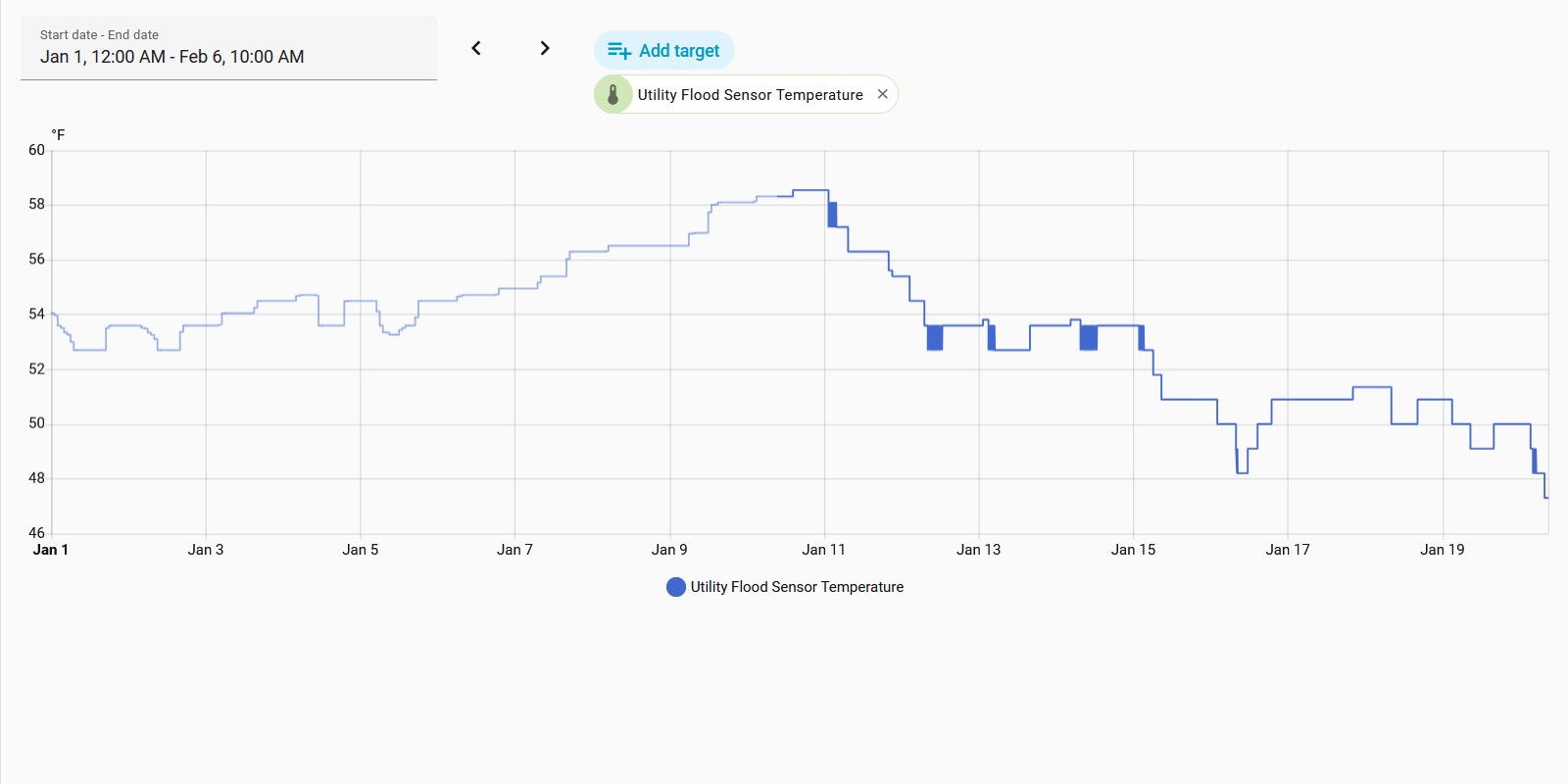
You can configure the temperature change threshold that triggers a report—typically 1, 1.5, or 2 degrees. This allows you to balance between getting timely freeze warnings and preserving battery life.
Performance So Far
The sensors have been solid performers. They respond quickly when tested, and the Wi-Fi connection has remained stable from the bays to the interior-mounted access point. No false alarms yet, which is always a good sign.
The magnetic mounting has also worked out well. When it’s time to swap batteries, the sensors pop right off. I can change the battery, replace the paper towel donut if needed, and snap everything back in place in less than a minute per sensor.
Having temperature monitoring as a bonus feature has been useful beyond the original leak detection purpose. We have been able to check bay temperatures from the comfort of the house.